20 years QU-AX
QU-AX was founded in autumn 2000, which means that it has been around for 20 years. This is a good opportunity to look back on 20 years of unicycle development.
How it began:
Back in 1986, Egon Becker, the founder of QU-AX, unloaded the first 50 unicycles from a container. This marked the beginning of unicycle imports to Germany. At the time, he was a buyer for a major German purchasing association. Most of the unicycles on the market in the late eighties were still homemade or produced in small batches. On photo 1), you can see a typical unicycle from that time with so-called ‘lollipop dropouts’, which turn smoothly but are not very sturdy. In 2000, he founded Becker Vertriebs-GmbH with the QU-AX brand. In 2009, the “OnlyOne” brand was registered. Can you guess where the name QU-AX comes from? QU-AX was the founder’s dog.
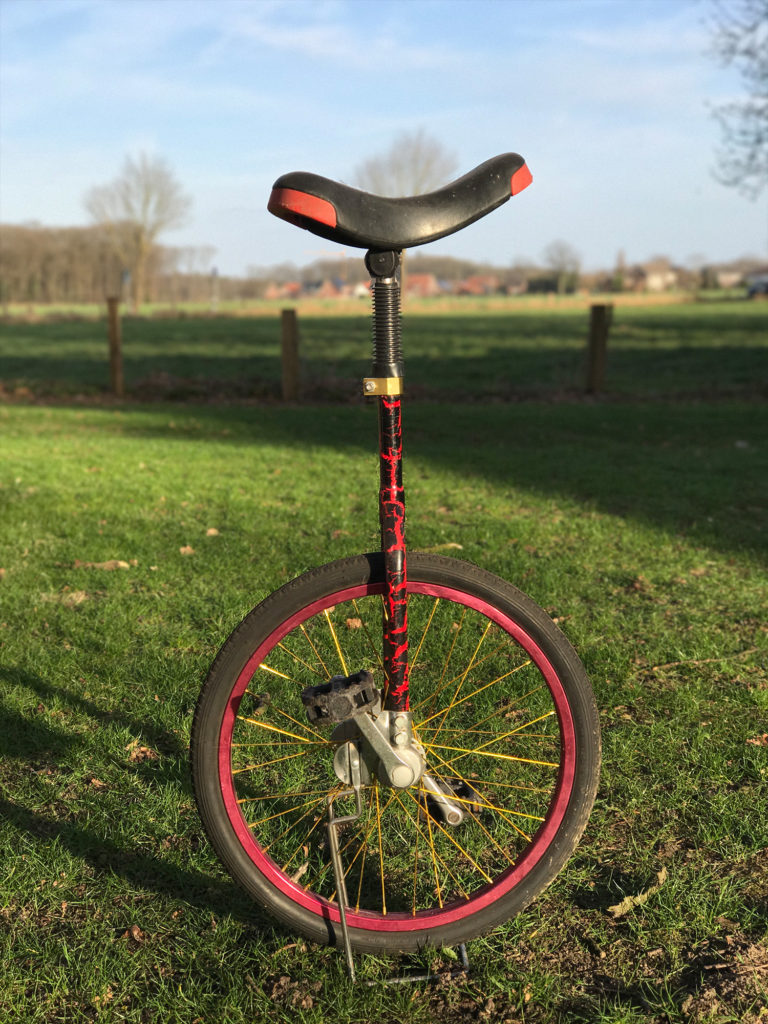
1) A typical unicycle like they were in the late eighties

The first range of unicycles
The first QU-AX unicycle was the ‘Standard’ range — now known as the ‘OnlyOne’. At that time, Miyata were the only manufacturer producing mass-market unicycles. The unicycles available in Europe were very basic, and there was little choice. The unicycles available at that time were neither very durable nor comfortable. They were more like circus equipment than sports equipment. For unicycles to become popular, children, parents, and bicycle dealers needed to realise that anyone can learn to ride a unicycle at any age.
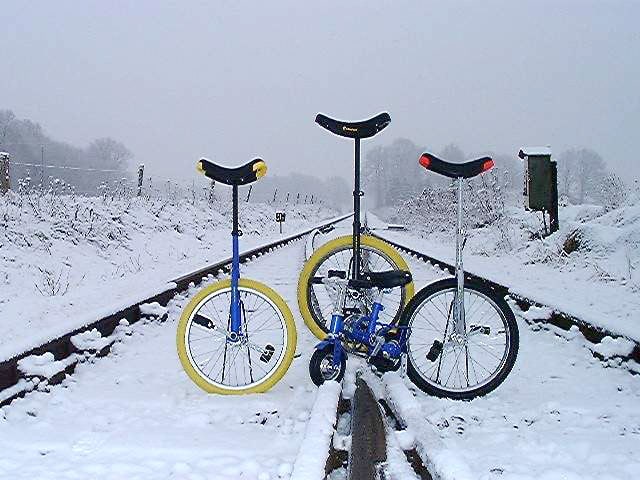
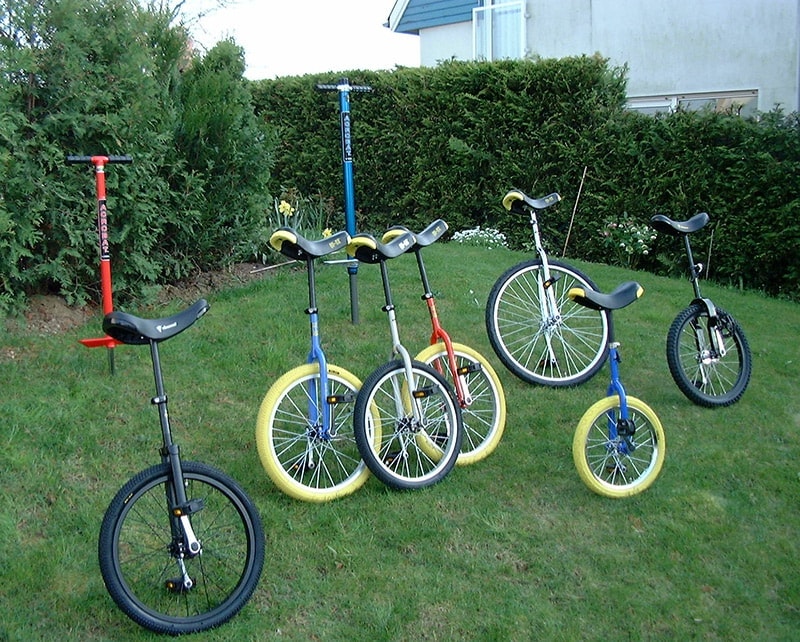
The photo above shows the first range of QU-AX unicycles. From left to right: the standard, the luxury and the professional models. The Minibike, which was blue at the time, was also one of the first products. Our efforts to popularise the sport, as well as the equipment, have helped to promote it in this country. Large suppliers such as Tchibo and supermarket chains offered unicycles, making unicycling a trendy sport for a while.
The professional unicycle mentioned above — a freestyle unicycle — was the first high-end model in the QU-AX range. It was often upgraded for freestyle competitions with Panaracer HP tyres and MKS pedals. Chromed models with short cranks were also standard in this discipline at that time.
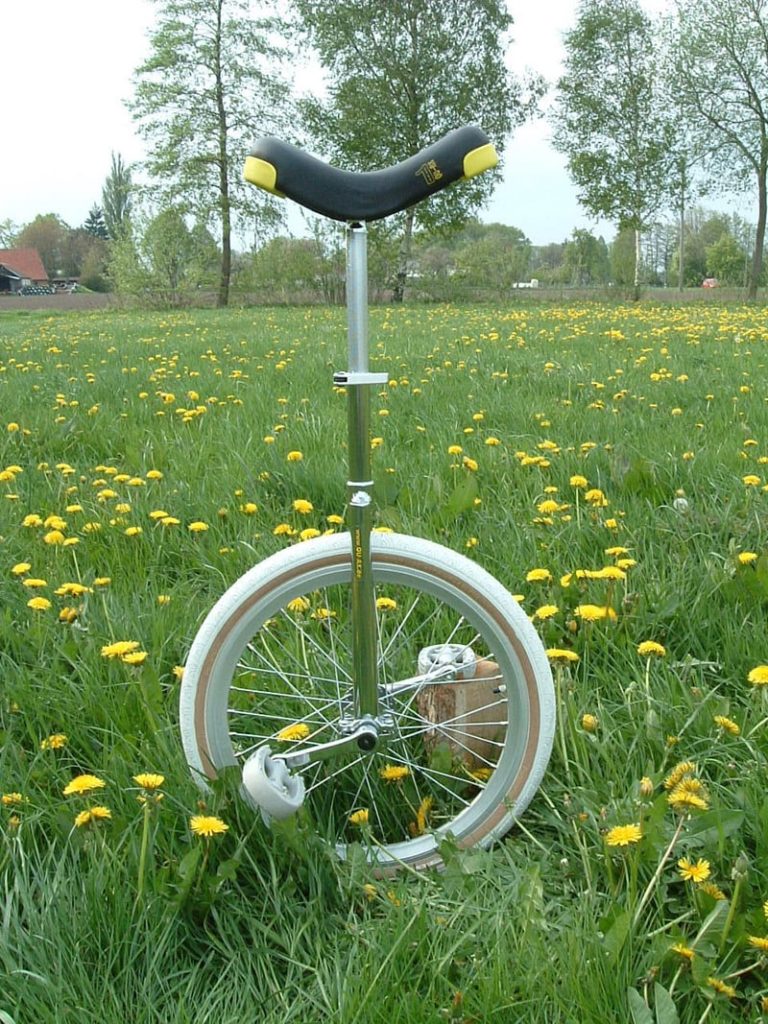
This unicycle is one of the most common in freestyle competitions, both now and in the past. Our goal has always been to make unicycles available to the widest possible audience by offering high-quality products at an affordable price. At the same time, we have constantly improved the quality and durability of our unicycles.
We have already added pogo sticks and other wheel sizes to the product range.
It was also at this time that municycling was born. This discipline was invented by Kris Holm. The first Munis were improvised from a mixture of unicycle and mountain bike parts.
The first mass-produced Muni
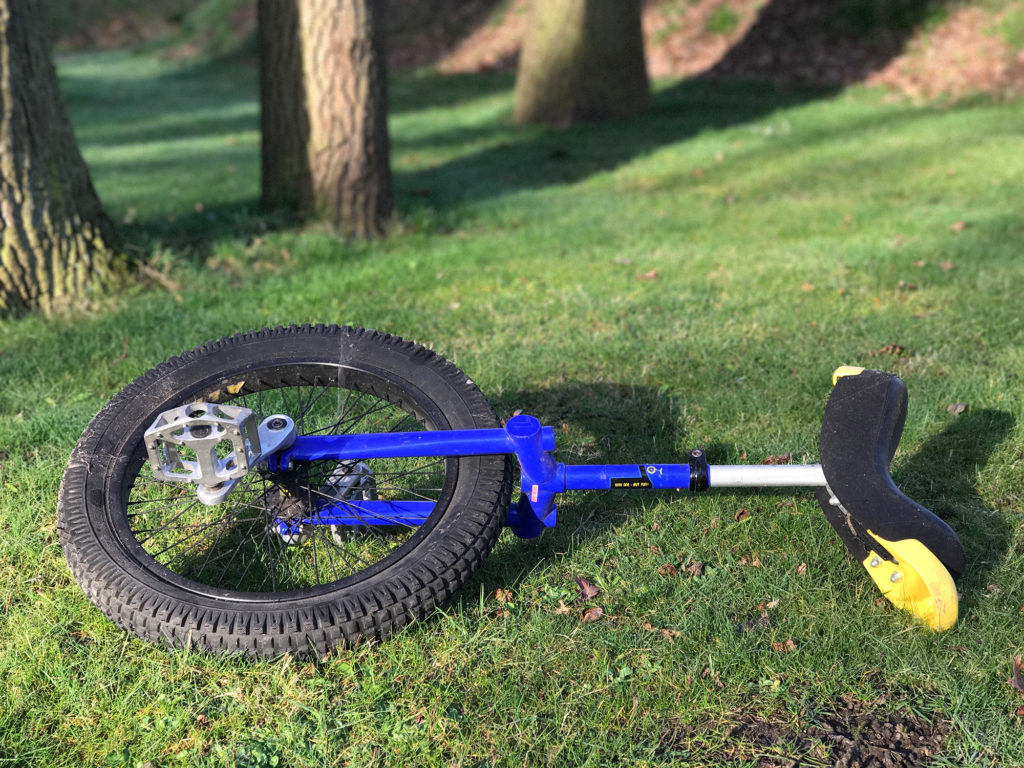
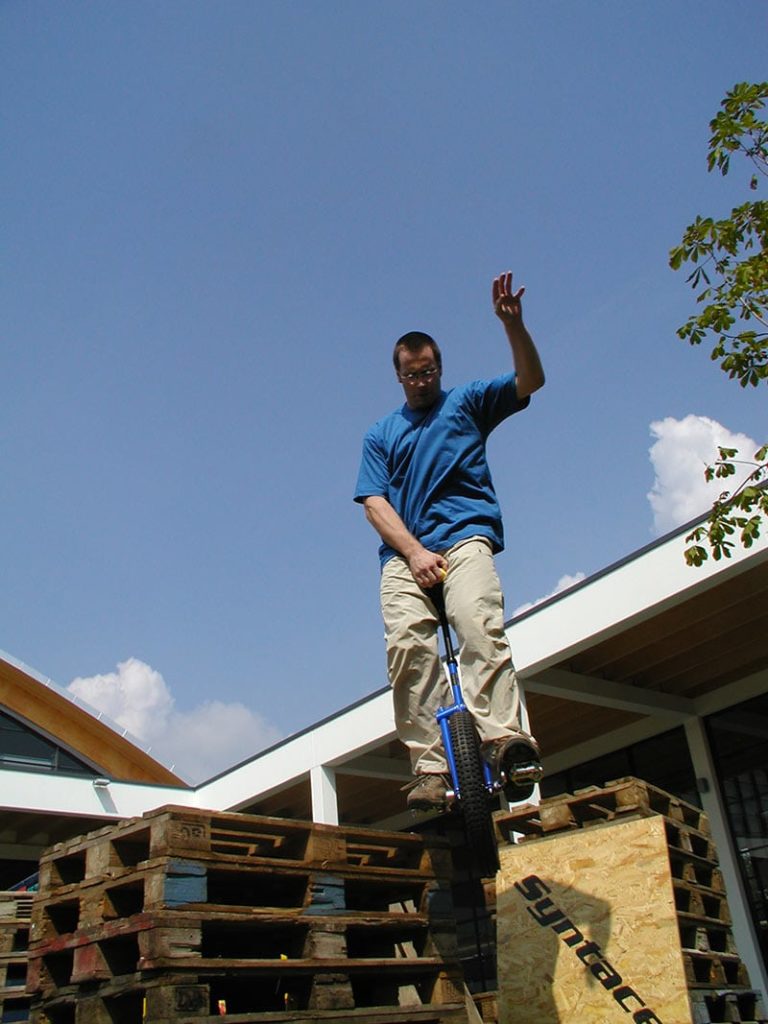
And so the world’s first mass-produced Muni was born.
The core of the first QU-AX Muni hub was a multi-spline axle similar to those used in BMX. The legendary yellow QU-AX Muni hub later became the first to perform a front flip on a unicycle. The original Muni featured 48 spokes and a voluminous 19″ trials tyre. Both of these features remained commonplace in trials for many years. The 19″ Creepy Crawler was first installed on the QU-AX Muni and was much lighter than the ‘Luna’ tyre that had been common until then.
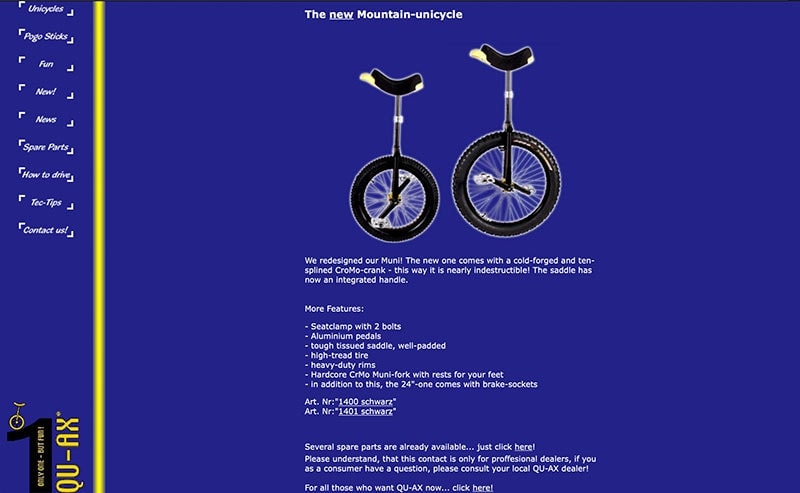
The first QU-AX-website presenting new Munis
The first GMTW
The first of many legendary GMTWs took place in 2003. This stands for ‘German Muni Trial Weekend’. Over a whole weekend, numerous participants came together to exchange ideas and celebrate municycling, including Kris Holm in 2005. This event still takes place every year!
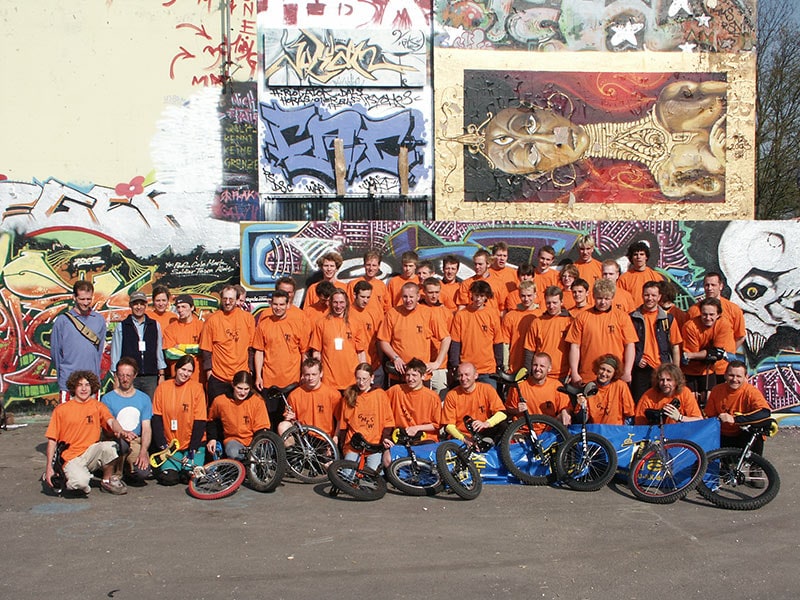
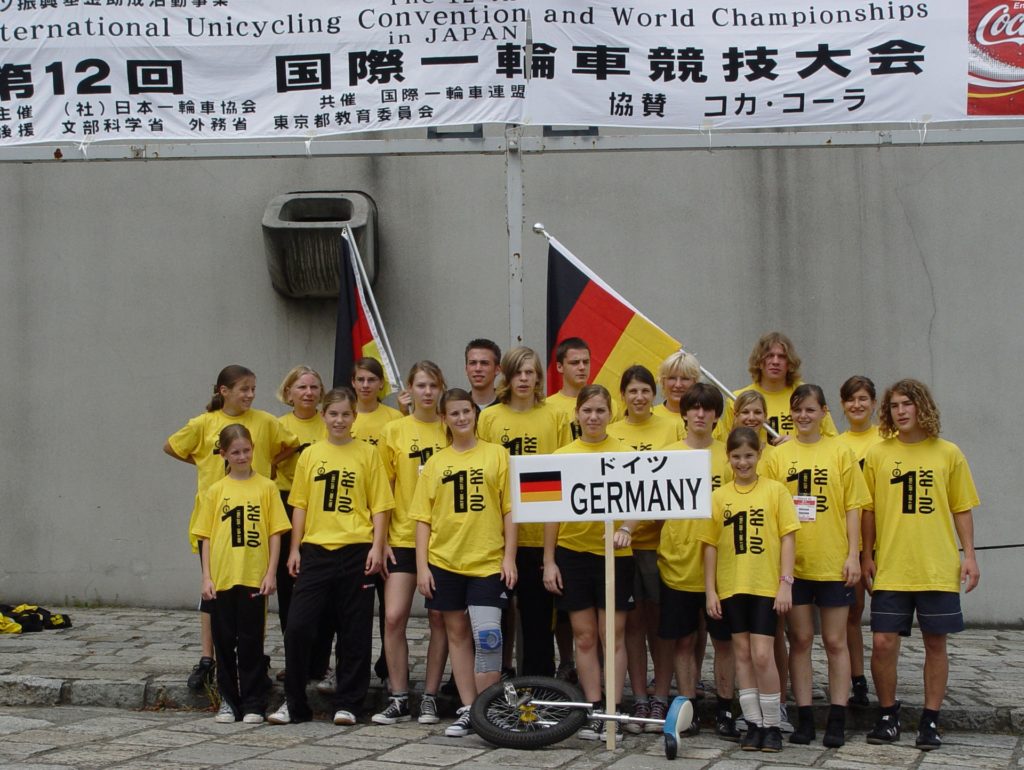
QU-AX has supported the GMTW from the beginning, as well as many other events and the German Unicon team. Can you spot Lutz Eichholz in the picture?
Make it available to many
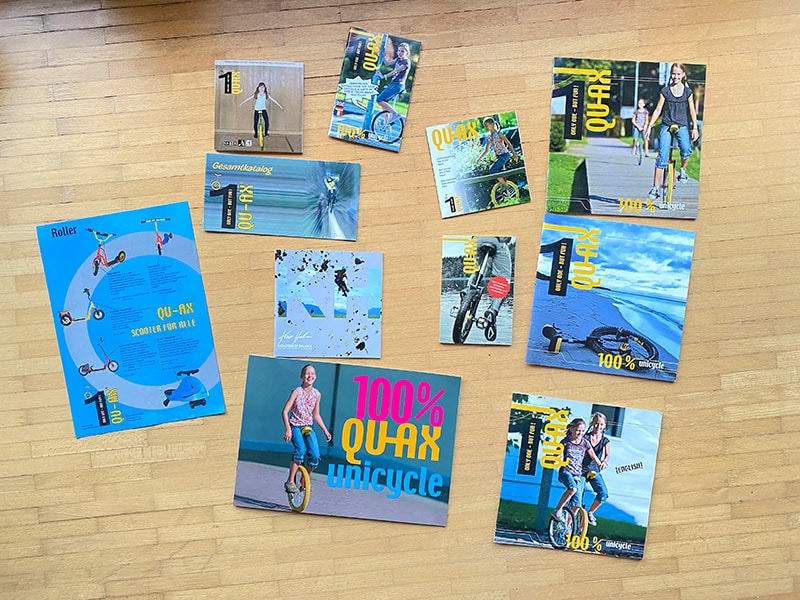
To bring unicycles to the masses, we attended the Nuremberg Toy Fair, Eurobike and the Taipei Cycle Show. In Germany in particular, high-quality, affordable unicycles were mainly sought — and bought — through the bicycle trade. Consequently, unicycles became increasingly associated with children and less with the circus. Adults also realised that anyone can learn to ride a unicycle. At the same time, the first printed unicycle catalogue was created, and it is still in circulation today.
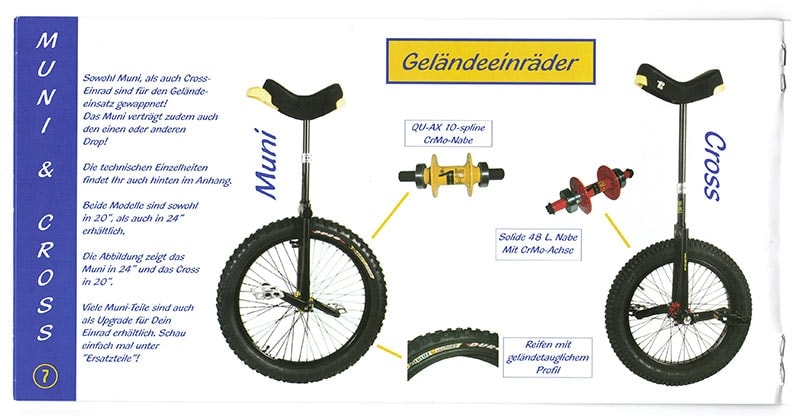
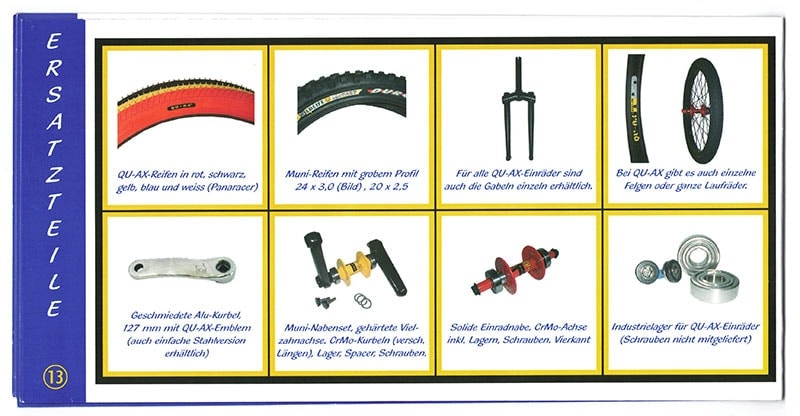
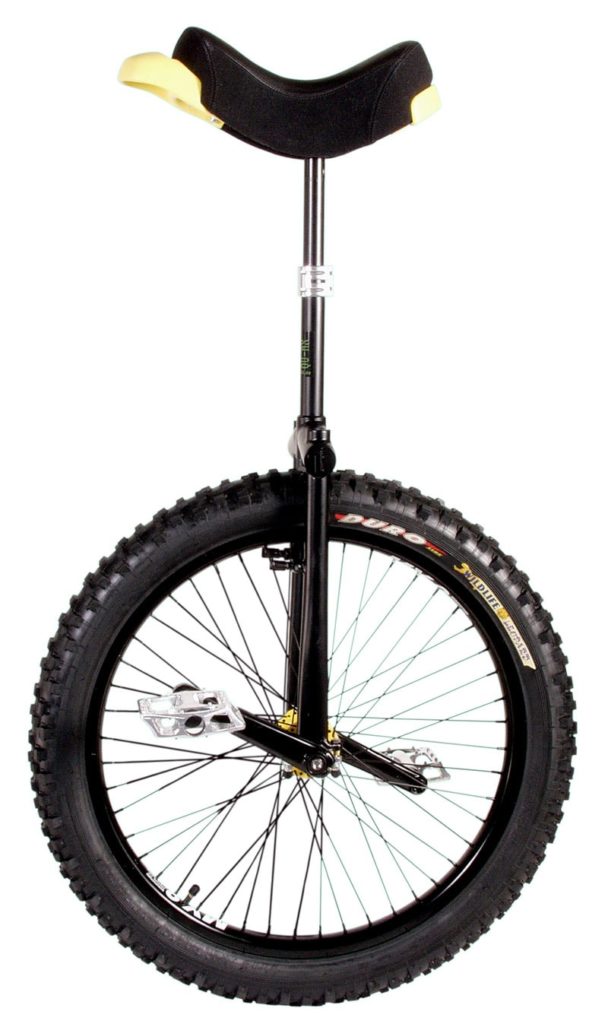
The first QU-AX Muni 24″ was released in 2003 and featured a multi-spline axle.
Muni & Cross, ISIS
Over the years, the Muni series has been expanded to include a wider range of wheel sizes, starting with a 24″ model with 48 spokes. Initially, only 170 mm unicycle cranks were available, not because they were ideal for riding, but because they were the only length available on the market. So we started making our own shorter lengths, which required high production quantities — an investment that paid off, providing a greater variety of riding opportunities and increased comfort. At the same time, we produced cranks with a lower Q-factor, which significantly improves handling on the unicycle.
Das erste QU-AX Muni 24″ in 2003 mit Multi-Spline-Achse
ISIS and Q-Axle
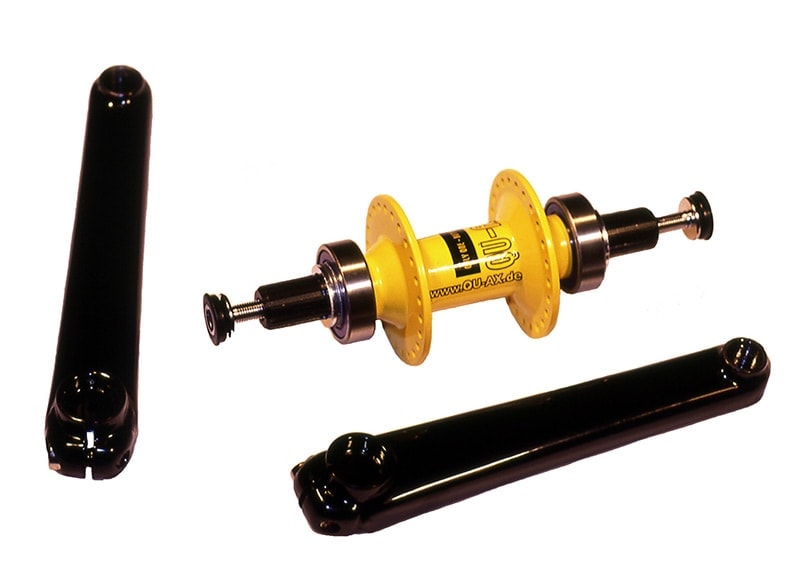
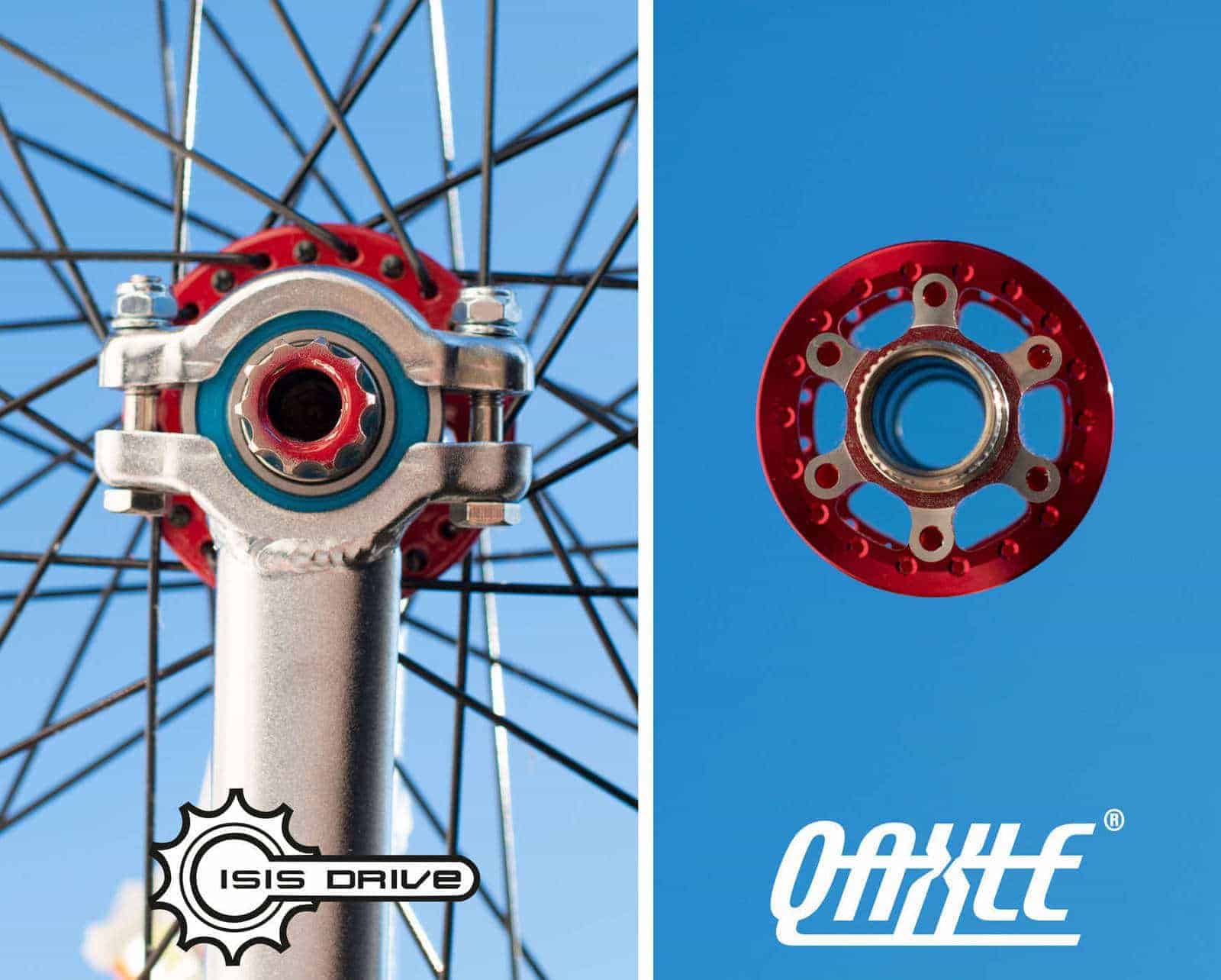
In the past, all unicycles were equipped with a simple square axle. However, with the popularity of Munis increasing, multi-tooth axles also became more common. These were much more robust and became lighter over time. Our technical and engineering background in bicycles meant that we were the first to bring the ISIS system to the unicycle, followed by the Q-Axle system in 2012. We have learned from further developments in the bicycle sector and adapted them to the needs of unicycles.
The ISIS system offered greater durability and stiffness thanks to the larger contact area between the crank and the axle. It then became a real ‘standard’, making it easier to determine which parts to fit to which unicycle, as well as making spare parts more readily available. The disadvantage of the ISIS system is that it wears out over time. The cranks are pressed onto a conical axle, which becomes increasingly worn over time.
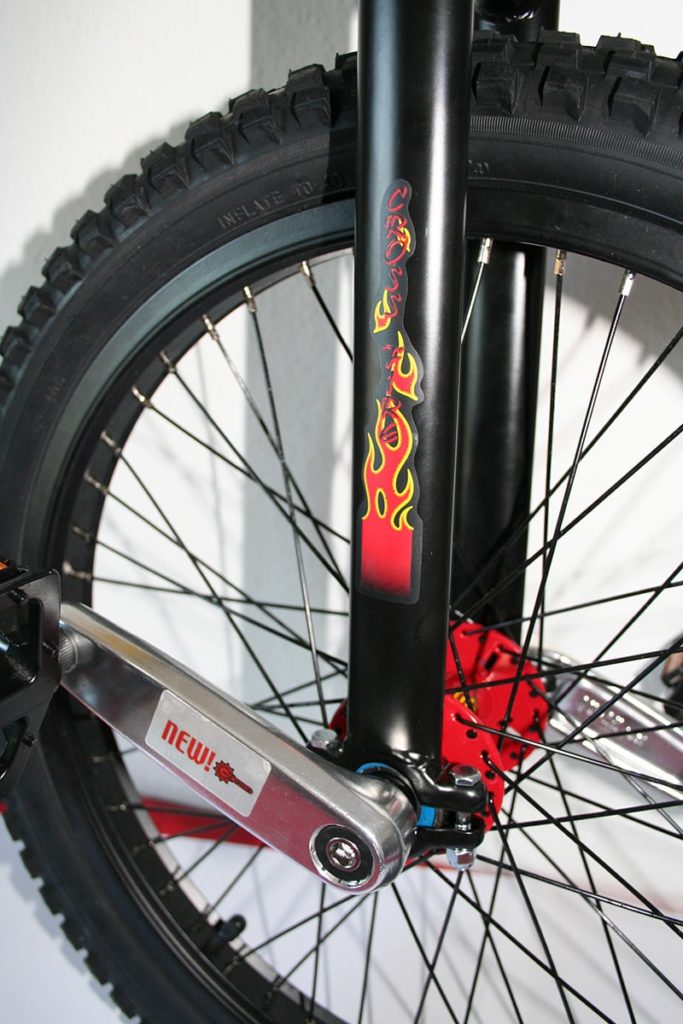
This problem has been solved by the Q-Axle system. An even larger, hollow axle reduces weight and increases stiffness, and thanks to 24 splines it provides an even larger connection surface. Furthermore, the cranks are now clamped to the axle rather than pressed. No matter how often the cranks are changed, considerable wear will not be experienced. This is one of the greatest achievements in unicycle development. We have never had hubs/cranks as reliable as these.
We have invested in a variety of lengths and variations to offer a wide choice. Meanwhile, the range of ISIS products on the market is getting smaller.


OnlyOne
The introduction of the “OnlyOne” in 2008 saw the “QU-AX Standard” become a separate registered brand. The aim of creating a spin-off brand was to make it available to more vendors, as QU-AX was exclusively offered by authorised importers in many countries. This would make high-quality, affordable unicycles available to an even greater number of dealers and customers. Chris Martin, the frontman of the band Coldplay, rode a 24″ OnlyOne in his “Paradise” music video:
QX-series and #rgb
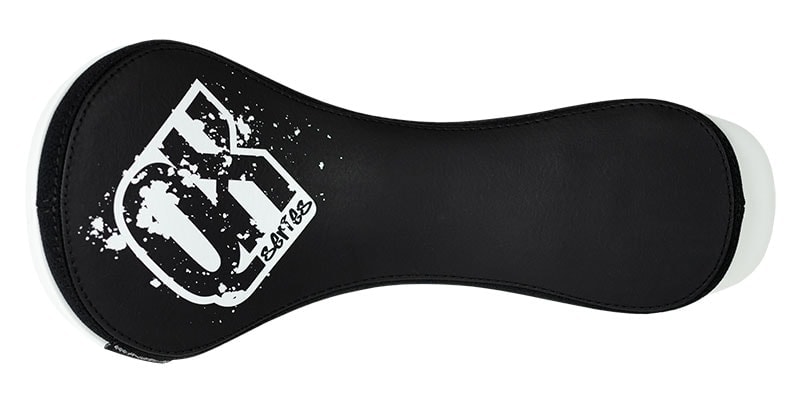
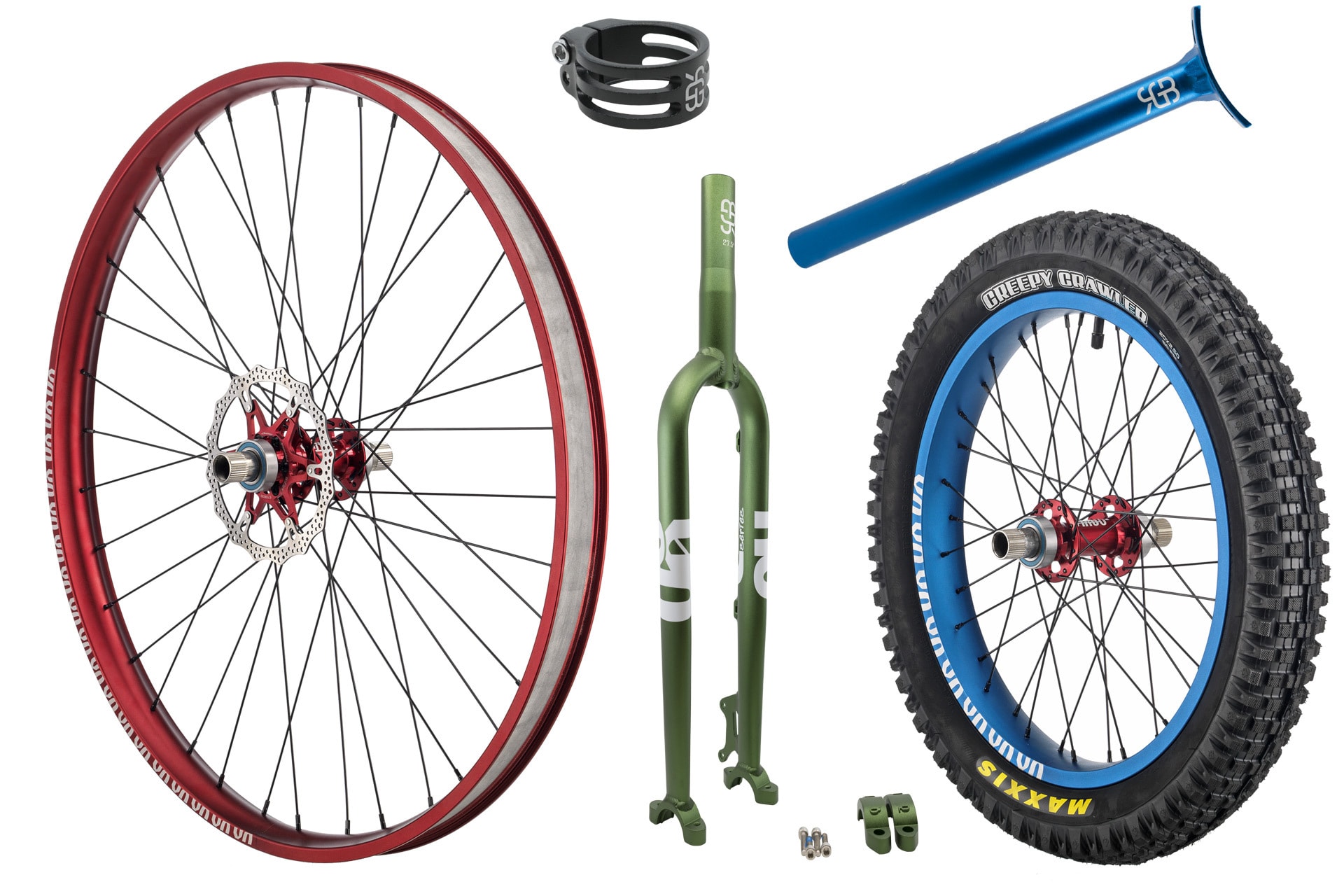
In 2009, we introduced the QX series — our high-end range of components with lightweight aluminium frames, carbon seatposts, titanium bolts, and modern-design flatland saddles. In 2018, we relaunched the QX-series under the hashtag #rgb, which stands for ‘rainbow gradient bend’ — thin-walled, colourful forks with large tube diameters that can be combined in four beautiful colours to suit your individual taste. Also created as part of this series is the popular QX-series Eleven saddle, which was developed in collaboration with Kris Holm.
David Becker, the nephew of the founder, has been working full time at QU-AX since 2009. He has been responsible for marketing since the beginning. Since 2018, he has led the company alone.
spiel gut and other awards
Over the years, numerous products from QU-AX have been awarded the spiel gut seal, including the luxury and OnlyOne unicycles.
The OnlyOne has been awarded the spiel gut seal.
QU-AX has been awarded the spiel gut seal.
QU-AX balance trainer awarded the spiel gut seal.
Other products, such as our Pogo Sticks or our balance trainer, have been awarded the “Bewegte Innovation” label.